AMERICAN WEDDINGS BLOG
Stay up to date with the latest wedding ceremony trends, script writing inspiration, tips and advice for first-time officiants, and news that matters to couples and wedding ministers.
Stay up to date with the latest wedding ceremony trends, script writing inspiration, tips and advice for first-time officiants, and news that matters to couples and wedding ministers.
Published Wednesday, Aug. 12th, 2026 | Last updated Thursday, Aug. 13th, 2026

Introducing AMM’s Complete First-Time Officiant Guide: All our expert online resources for officiating a friend’s wedding, in one super-easy-to-use megaguide!
We’ve been writing advice for wedding officiants for almost two decades – covering everything from the best places to get ordained online to officiate a friend’s wedding, to niche posts on how to perform pagan wedding rites, what to say when someone interrupts your ceremony, and much more.
After so much time, and so many articles, it can be difficult for a brand-new officiant to know where to get started. That’s why we’re publishing this guide – with all our expert resources organized in one place – to guide you through the process.
As one of the most trusted places to get ordained online, and your go-to place for wedding officiant training and ceremony planning advice, we’re absolutely honored to help you take your marriage vows. Now, we’re making it easier to find the advice you need!
Before we dig in: This guide is intended for friends and relatives who have been asked to officiate their first wedding ceremony – though it will be helpful to anyone interested in what it means to be a wedding officiant.
If you’re interested in performing weddings professionally, you may prefer The Ultimate Wedding Officiant Business Guide: All Our Pro Officiant Resources in One Place
Hear how these first-timers felt after performing their first wedding:
I Officiated a Friend’s Wedding & Here’s How it Went…
SECTION ONE: What Is a Wedding Officiant?
- Learn More About the Role of Wedding Officiant
SECTION TWO: Legal Requirements to Officiate a Friend’s Wedding
- Online Ordination to Officiate a Wedding
- Online Ordination vs One-Day Officiant Permit
- Who Can Officiate a Wedding for Friends?
- Exploring Types of Online Ordination
- Comparing Ordination and One Day Officiant Permits
- Minister Registration for New Wedding Officiants
- States and U.S. Territories That Require Minister Registration
SECTION THREE: Getting to Know the Couple You’re Marrying (& The Type of Wedding Ceremony They Want)
- The Basics
- Questions Wedding Officiants Should Ask
SECTION FOUR: Writing a Wedding Ceremony Script
- What is a Wedding Ceremony Script?
- An Example of Short Wedding Ceremony Script
SECTION FIVE: Sample Wedding Ceremony Scripts for Officiants
SECTION SIX: Making Revisions and Practicing the Ceremony Script
A wedding officiant is the person who leads a marriage ceremony and completes the official marriage documents (marriage license or marriage certificate).
Usually, you’ll find them standing at the front of a wedding ceremony next to the people getting married. They might be holding a microphone and reading from the wedding ceremony script, or instructing the couple on when to say their marriage vows or exchange wedding rings. In a courthouse setting, a judge may serve as wedding officiant, performing the marriage ceremony for a couple in front of their guests. And in a traditional religious wedding, a faith leader serves as the wedding officiant, performing the rites of marriage.
As you can see, there are many different types of wedding officiants, for different types of weddings! We explain what it takes to become a legal wedding officiant in the next section.
AMM Officiant Training: What is a Wedding Ceremony?
AMM FAQs: What is a Marriage Officiant?
AMM Officiant Training: What is the Role of the Officiant in a Wedding Ceremony?
O en español Cómo Oficiar Una Boda Por Primera Vez
Congratulations on being asked to officiate a friend’s wedding! It’s an honor to have such an important role on someone’s wedding day. Without you, your loved ones wouldn’t be married at the end of the party, and that’s a big deal!
Before we talk about the fun parts of performing a wedding however, it’s important to get the legal to-dos out of the way so that you can feel confident in your role. These legal to-dos are: Ordination (or a One-Day Permit), and Minister Registration.
Most people who are asked to officiate a friend’s wedding find that becoming an officially ordained member of an online church is the easiest way to become a qualified wedding officiant – for example getting ordained online for free with American Marriage Ministries (AMM)!
Free online ordination with American Marriage Ministries (AMM) gives friends and family members the needed authority to officiate a wedding across the United States – and our free officiant training resources and helpful staff make us one of the most popular places to get ordained on the internet year after year. Just click the link below to fill out the application!
|* ordination-button *|
Of course, AMM isn’t the only online church that provides this important service. And some people don’t want to get ordained online at all for personal or religious reasons. In these cases, you may be interested in learning about other organizations, or purchasing a one-day officiant permit from a state office. It’s important for all first-time officiants to select the option that’s best for them!
Can you legally perform a wedding ceremony for your friends and family? Yes!
Who Officiates a Wedding if You Don’t Go to a Courthouse or Church?
Who Officiates an Atheist Wedding? 3 Types of Officiants for a Non-Religious Marriage Ceremony
O en español, ¿Qué Edad hay que tener para Oficiar una Boda?
AMM ordains people of all faiths -- from pagans to monotheists, atheists to agnostics!
Online Ordination for Modern Pagans: Why it’s So Important, Especially Now
Popular Places for Non Denominational Ordination Certificates Online
O en espanol, Sitios populares para obtener certificados de ordenación no denominacional en línea
Where to Get Ordained Online to Perform a Wedding or Funeral (Legally!)
How to Get Ordained Online & Officiate a Friend’s Wedding Ceremony
In some states, getting ordained online isn’t enough on its own to officiate a wedding legally – you must also submit copies of your ordination credentials with a local office before the ceremony.
Arkansas, Delaware, Hawaii, Louisiana, Massachusetts, Minnesota, Nevada, New Hampshire, New York, Ohio, Puerto Rico, Vermont, Virginia, Washington DC, West Virginia
If you’re officiating a wedding in one of these states, we recommend you order an AMM Minister Ordination Package. This package includes all the documents you’ll need, and instructions on how to submit them.
|* mop-button *|
Once the legal to-dos are out of the way, it’s time for the fun parts of preparing for the wedding ceremony! Before you start writing the wedding ceremony script – what you’ll say on the big day – we recommend you meet with the couple you’re marrying at least once to talk about the kind of ceremony they want.
Even if you’ve been friends or relatives for years, you shouldn’t skip this step! It’s very common for couples to have specific things they want to include in their wedding – and specific things they don’t want. It’s very important for you to consider these elements when choosing what to say on the wedding day.
You can also use this conversation to learn more about their relationship, their ‘love story,’ their sense of humor, how they feel about marriage in general (and theirs in particular), their shared values, and the tone they want for the ceremony. Do they want a funny wedding, a formal one, or something in between? Religious, or nonreligious? Ask questions, talk about special elements, personal preferences, and how they imagine the perfect wedding ceremony.
Keep this timeline in mind when meeting with your friends to discuss performing their wedding:
O en espanol, Cronograma para oficiantes de boda
AMM Pro Officiant Training Sample Course: 3.3 Gathering the Details (From the Couple)
AMM Officiant Training: Collaborate With The Couple
AMM Officiant Training: Nail Down The Logistics
AMM Officiant Training: Gather Info for the Ceremony
AMM Officiant Training: How to Maintain Communication with Your Couple
Your Religion, My Religion, or No Religion - Make Sure Your Officiant Knows!
Asked to Officiate a Friend’s Wedding? Ask These 5 Questions to Plan an Unforgettable Ceremony!
Having the Talk: How to Tell a Compelling Story During Your Wedding Ceremony
Funny & Helpful Advice: 55 Questions a Wedding Officiant Can Ask a Couple to *Really* Get to Know Them
O en español, 55 Preguntas que un oficiante de bodas puede hacerle a una pareja para *realmente* conocerlos
Now that you’ve gathered information about the tone and style of wedding that your friends would like to have, you’re ready to put pen to paper writing the “wedding ceremony script,” which will guide the wedding ceremony from start to finish.
The wedding ceremony script – also known as the “wedding script” or “officiant script” – is a written outline of the wedding ceremony that includes what each person will say and do during the ceremony. It’s similar to the script for a theater play, describing the sequence of events and dialogue of the wedding ceremony.
During the wedding, you will read from this script throughout the ceremony, guiding your friends through each part and making sure nothing important gets left out – or left unsaid!
Here’s a quick intro to the concept: AMM FAQs: What Does an Officiant Say at a Wedding?
We’ll go into this in a lot more detail below – so don’t worry about understanding the wedding script all at once.
OFFICIANT (SPEAKING TO COUPLE AND GUESTS):
“We are gathered here for the purpose of uniting in matrimony (Partner A) and (Partner B). The contract of marriage is most solemn and is not to be entered into lightly, but thoughtfully and seriously with a deep realization of its obligations and responsibilities.
Please remember that love, loyalty and understanding are the foundations of a happy and enduring home. No other human ties are more tender and no other vows more important than those you are about to pledge.”
OFFICIANT (SPEAKING TO COUPLE):
“Please face each other and join hands.”
OFFICIANT (SPEAKING TO PARTNER A):
“Do you, (Partner A), take (Partner B) to be your lawful wedded spouse? Do you promise to love them, and comfort them, honor them, and keep them in sickness and in health, for richer and for poorer, for better or for worse, and be faithful to them as long as you both shall live?”
PARTNER A (SPEAKING TO OFFICIANT AND PARTNER B):
“I do.”
OFFICIANT (SPEAKING TO PARTNER B):
“Do you, (Partner B), take (Partner A) to be your lawful wedded spouse? Do you promise to love them, and comfort them, honor them, and keep them in sickness and in health, for richer and for poorer, for better or for worse, and be faithful to them as long as you both shall live?”
PARTNER B (SPEAKING TO OFFICIANT AND PARTNER A):
“I do.”
OFFICIANT (SPEAKING TO COUPLE):
“Please exchange the rings you’ve chosen as a symbol of this sacred promise.”
OFFICIANT (SPEAKING TO THE COUPLE):
“Now that you have joined yourselves in matrimony, may you strive all your lives to meet this commitment with the same love and devotion that you feel today.
By virtue of the authority vested in me by the State of (Name of State) and American Marriage Ministries, I now pronounce you married!”
The wedding ceremony script really is like the script for a theater play! Unlike an actor, however, you don’t need to memorize your speaking parts, because you will have a printed copy of your script with you during the ceremony to guide you through.
AMM Officiant Training: How To Write a Wedding Ceremony Script in 9 Steps
AMM Officiant Training: How to Write Your First Draft (Wedding Script)
AMM Officiant Training: Tips for Personalizing the Wedding Ceremony
Wedding Ceremony Outline & Order : Understanding the Parts of a Wedding Ceremony
Writing Tips: It’s Personal… Putting the “You” into a Wedding Ceremony
A Simple Wedding Script to Use When a Friend Officiates Your Ceremony
The secret to a perfect wedding officiant speech (with examples)
Officiant Quick Tip: Ceremony Writing with AMM Minister Liz Rae (of Liz Rae Weddings)
WATCH A VIDEO: The Love Story: Interviewing Couples & Crafting Memorable Ceremonies for All | Officiants Online
Many first-time wedding officiants discover that it’s easier to customize an existing wedding ceremony script than to start from scratch. Use these sample wedding ceremony scripts as inspiration: mix and match your favorite parts and personalize the sections you like most. Get creative! Just keep the couple’s desired tone and style in mind as you write.
Wedding Ceremony Script PDFs for Officiants: Download, Print, and Perform!
Guiones de ceremonias de bodas en español en PDF para oficiantes
WATCH A VIDEO PLAYLIST: Full Wedding Ceremony Scripts Performed by a Real Officiant
Congratulations! At this point in your officiant journey, you’ve put pen to paper and have a written wedding ceremony script and outline for the ceremony. This is a massive accomplishment. The next step will be easier; it’s time to read your ceremony script outloud, make a few revisions as needed, and practice your speaking parts before the wedding day.
AMM Officiant Training: How to Lead the Ceremony with Conviction and Confidence
Advice for Officiants: All About Wedding Ceremony Rehearsals
Public Speaking: Deliver Your Wedding Ceremony with Confidence in Just 3 Minutes!
What Should I Do With My Hands? 4 Tips For First Time Wedding Officiants
This is what you and your friends have been working towards – the wedding day! Before you take your place at the front of the ceremony (and in front of guests, photographers, and videographers…) you might have a few lingering questions. Questions like: What should I wear to officiate? Should I bring an extra copy of the wedding script, or an extra tie, just in case something goes wrong? Oh no, what if something goes wrong!!
Don’t worry, we’ve talked to many first-time officiants with the same last-minute questions and concerns!
AMM Officiant Training: Calming a Nervous Bride or Groom During the Ceremony
Wedding Ceremony Stage Fright: Tips for officiants (and couples)
O en español, Qué Usar Y Qué No Usar Como Oficiante De Bodas)
Right Before You Step on Stage: A Wedding Officiant’s (Very) Last Minute Checklist
O en español, Qué incluir en un kit de emergencia para el día de la boda para el oficiante)
Look Like an Over-Prepared Superhero: The Five Things All Wedding Officiants Should Have
O en espanol, Parezca un Superhéroe Demasiado Preparado: 5 Cosas Que Todo Oficiante de Bodas Debería Tener
As we mentioned earlier, you have a very important role on the wedding day: without you, your friends wouldn’t be married at the end of the party. That’s because the wedding officiant role also includes filling out the couple’s official marriage license, and making sure it’s returned to the correct office (either by you, or by the newlyweds, depending on the state’s laws). Without a completed marriage license – signed by you – your friends aren’t married yet!
What Does a Wedding Officiant Do After the Wedding Ceremony?
O en español, ¿Qué hace un oficiante de bodas después de la ceremonia nupcial?
AMM Officiant Training: Understanding the Wedding License Process
AMM Officiant Training: Step-by-Step Wedding Day Marriage License Duties
AMM Officiant Training: Complete and Sign the Marriage License
AMM Officiant Training: How To Fill Out A Marriage License As An Officiant
AMM Officiant Training: Witness Requirements on Marriage License
Can a Wedding Officiant Also be a Witness on a Marriage License?
O en español, ¿Puede la persona que realiza la boda ser también testigo en la licencia de matrimonio?
Click this link to see marriage license resources currently available for your state:


Choose Your Officiant with our "Will You Marry Us?" Gift Package.
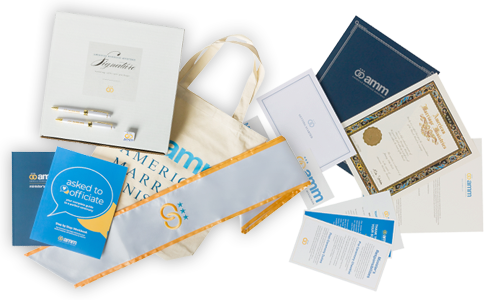
Our premiere package contains everyting you need to officiate like a pro.
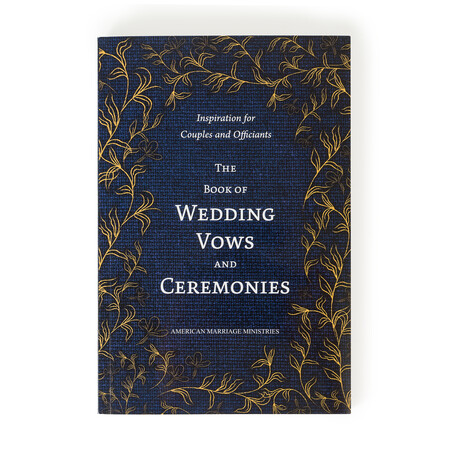
Timeless scripts and heartfelt vow inspiration to bring life to your ceremony.
Learn from the Pros to Officiate with Confidence!
POPULAR ARTICLES

Everything you need to know to officiate.

Need inspiration? Check out our free ceremony scripts!
Become a Wedding Officiant with Our Free Online Ordination!


