AMERICAN WEDDINGS BLOG
Stay up to date with the latest wedding ceremony trends, script writing inspiration, tips and advice for first-time officiants, and news that matters to couples and wedding ministers.
Stay up to date with the latest wedding ceremony trends, script writing inspiration, tips and advice for first-time officiants, and news that matters to couples and wedding ministers.
Published Tuesday, Nov. 2nd, 2021 | Last updated Thursday, Sep. 4th, 2025

We’re all familiar with what a marriage license is -- the legal document that’s signed and submitted when a couple agrees to marry. But what is a confidential marriage license?
This unique type of marriage license is only available in California, and serves a special purpose: to keep a marriage record private. If this is your first time learning about a confidential marriage license, you might be wondering:
How are confidential marriage licenses different from public licenses?
What are the pros and cons of a confidential marriage license?
How do couples apply for a confidential marriage license?
What does a wedding officiant need to know to complete or file one?
Read on for answers to all of these questions, and more!
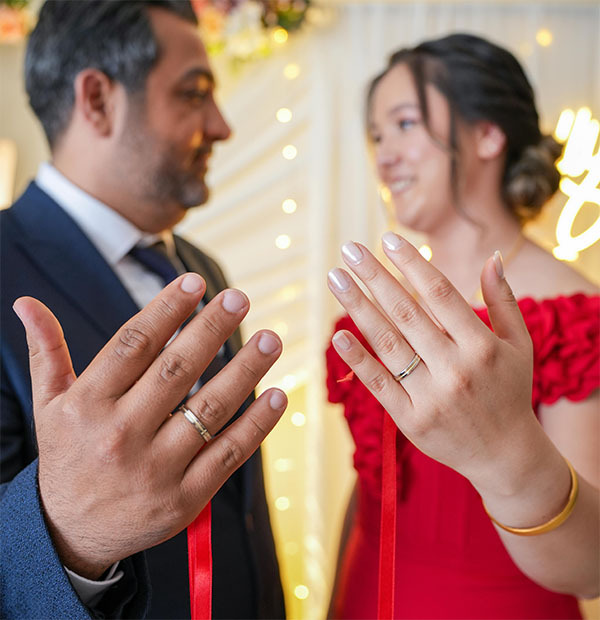
Getting married in California? Consider the pros and cons of a confidential license. (Photo by Busenur Demirkan / Pexels)
Public vs confidential: The key difference between a public marriage license and a confidential license is that confidential licenses don’t become part of the public record and can only be accessed by the couple or by court order.
Every state requires a couple to file a marriage license to prove that they are legally married. Some states call this form something else, such as Alabama’s notarized ‘marriage certificate forms,’ but the principle is the same across the US: If a couple wants to be legally married, they must record their union with the local government after the marriage is solemnized.
These records are usually public, meaning that anyone can access them by contacting a Clerk or Vital Records office in the county or state where they are filed.
Confidential marriage licenses are also filed with the County Clerk, but they don’t become public record.
For most people, having a public record of their marriage isn’t a big deal. But for others, such as celebrities, political figures, and others in the public eye (or those who want to stay out of it), it’s important to keep their personal details and marriages private. This is why many couples choose a confidential license.
When California first introduced the option for confidential marriage records back in 1878, it was a convenient way for couples who had been secretly ‘living in sin’ to legally marry without blowing their cover… which a public wedding certainly would do. This discrete option helped encourage marriage and simplified things when caring for children or distributing inheritances.
These days, it’s a popular option for a variety of reasons, including a lower cost than regular license and no need for witnesses, and an estimated one-fifth of marriages in California are confidential.
Until recently, confidential licenses could only be used in the county in which they were issued. This was a major disadvantage for many couples, but the requirements were updated in 2015 and all licenses can now be used in any county in the state.
A potential disadvantage is that couples must be living together when they apply. This information is provided by the couple and won’t be checked by the county, but could pose a problem for couples who aren’t living together and answer honestly on their application.
Minors are not able to apply for this type of license, even with permission from a guardian.

Want to elope in California?
Confidential marriage licenses don't require witness signatures,
making them a great choice for elopements.
Applying for a confidential license is similar to applying for a public one, but there are a few unique requirements to be aware of. Couples in California should contact their local county clerk to learn more and begin the application process.
Wedding officiants will be relieved to know that signing and filing a confidential license is very straightforward. For this information, we look to § 506 of the California Family Code, which states that:
(a) The confidential marriage license shall be presented to the person solemnizing the marriage.
(b) Upon performance of the ceremony, the solemnization section on the confidential marriage license shall be completed by the person solemnizing the marriage.
(c) The confidential marriage license shall be returned by the person solemnizing the marriage to the office of the county clerk in the county in which the license was issued within 10 days after the ceremony.
This means that a wedding officiant will complete the marriage license in the same way that they would a public license. After the ceremony, the officiant will return the license within 10 days to the county where it was issued. This is the same ‘return period’ given for a regular license.
If a confidential marriage license is lost, damaged, or destroyed after the wedding ceremony, but before it’s returned to the county clerk, the wedding officiant must file an affidavit with the county clerk within one year of the ceremony to obtain a duplicate license. ( § 510 )
|* ordination-button *|
There’s no ‘take-two’ when it's time to say ‘I do'! Wedding officiants only get one shot to perform a perfect wedding ceremony. Give yourself the tools and training you deserve to succeed as a wedding officiant with AMM's Professional Wedding Officiant Certification Course and stand beside the lucky couple with complete confidence on their big day.
► VISIT THE COURSE PAGE TO LEARN MORE


Choose Your Officiant with our "Will You Marry Us?" Gift Package.
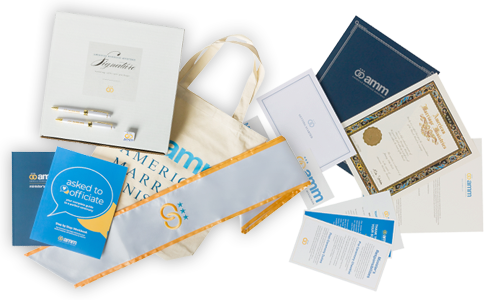
Our premiere package contains everyting you need to officiate like a pro.
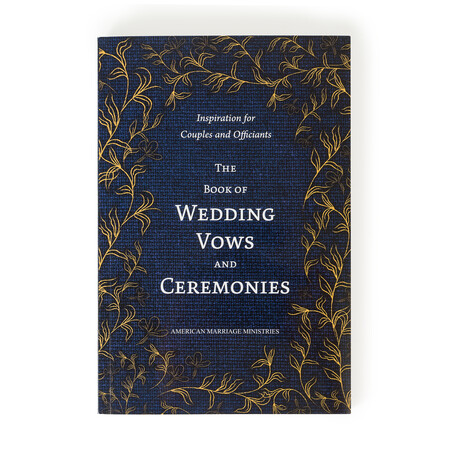
Timeless scripts and heartfelt vow inspiration to bring life to your ceremony.
Learn from the Pros to Officiate with Confidence!
POPULAR ARTICLES

Everything you need to know to officiate.

Need inspiration? Check out our free ceremony scripts!
Become a Wedding Officiant with Our Free Online Ordination!


