AMERICAN WEDDINGS BLOG
Stay up to date with the latest wedding ceremony trends, script writing inspiration, tips and advice for first-time officiants, and news that matters to couples and wedding ministers.
Stay up to date with the latest wedding ceremony trends, script writing inspiration, tips and advice for first-time officiants, and news that matters to couples and wedding ministers.
Published Tuesday, Sep. 30th, 2025 | Last updated Monday, Sep. 29th, 2025

Any day now, the Supreme Court will decide whether or not to hear a case that has the potential to overturn Obergefell v. Hodges, sending same-sex marriage rights back to the individual states to decide. Many LGBTQ+ couples are understandably anxious about what might happen, and some are moving up their wedding dates to marry before the end of the year.
How much fear is warranted, and what’s really at stake for marriage equality in the coming months? Here’s a closer look at what’s going on.
Disclaimer: This article is not intended as legal advice; it's meant to be educational only. Please contact your attorney directly for the most up-to-date information and for answers to any specific questions or concerns your family has. Read AMM's full disclaimer here: American Marriage Minsitries General Website Disclaimer.
|* store-button *|
During the next few days or weeks, the Supreme Court will decide whether or not to hear an appeal from former Kentucky county clerk Kim Davis (Ermold v. Davis), who was ordered to pay $360,000 a few years ago for violating a same-sex couple's constitutional right to marry in 2015.
As you might remember, Kim Davis was fired in 2015 for refusing to issue a marriage license to a same-sex couple following the Court’s ruling in favor of marriage equality. Davis claimed that same-sex marriage was against her religious beliefs, but was found to have violated the couple’s rights.
Because Davis’s case is centered around same-sex marriage rights and the 2015 Obergefell v. Hodges ruling, this appeal gives SCOTUS the opportunity to revisit, and possibly reverse, Obergefell. It comes at a particularly volatile and vulnerable time for the LGBTQ+ community.
Some marriage equality advocates have been expecting this for some time, however. In 2023, a federal jury ruled that Davis must pay the couple she’d refused to help a sum of $100,000 for emotional damages, and also ordered her to pay $260,000 towards their attorneys' fees. At the time, Davis’s lawyers immediately stated they would appeal the decision.
“We look forward to appealing this decision for Kim Davis," Mat Staver, an attorney for Davis, told reporters back in 2023. “We will argue religious accommodation under the First Amendment, and other state and federal laws. We will also argue that Obergefell v. Hodges was wrongly decided and should be overturned.”
Now, Davis’s lawyers are keeping their word, and hoping an increasingly-conservative Court will support her, ultimately overturning Obergefell’s protections for same-sex couples.
But nothing is guaranteed (aka, don't panic). SCOTUS may turn down the request as they’ve done in the past – Davis’s lawyers asked SCOTUS to hear an appeal of an earlier decision against Davis back in 2020, but they declined.
If SCOTUS eventually rules that Obergefell v. Hodges should be overturned (and that’s still a big “if”), same-sex marriage rights would return to the states to decide.
That means it would be up to each individual state to protect same-sex marriage, as decided by their state’s marriage laws. States that want to outlaw same-sex marriage could do so, and same-sex couples in those states would have to travel to another state – one without a ban – to get a marriage license.
Well, this is where things get unpredictable. The current administration, and the current Court, are moving faster than they have in the past.
If SCOTUS decides to hear Kim Davis’s appeal in the next few days, experts say that we can expect oral arguments to begin in late 2025 to spring of 2026, with a decision by late spring or early summer of 2026.
If SCOTUS then decides to overturn Obergefell, the impact could be immediate in those states that still have old same-sex marriage bans written into their laws. While some states have repealed their old bans since 2015, some have left them as-is, despite them being unenforceable.
These so-called "zombie laws" could come back to life and take effect almost instantly, in the same way that old abortion bans were reactivated following the reversal of Roe v. Wade.
Related: The Threat to Same-Sex Marriage in a Post-Roe World
County clerks in these states could refuse to issue marriage licenses to same-sex couples. And county clerks in states without bans might be emboldened to refuse service to LGBTQ+ couples as well – creating additional legal chaos.
The Respect for Marriage Act was passed under Biden’s administration and protects marriage rights by requiring all states to recognize valid same-sex marriages performed in other states. This means that the rights of a couple who is legally married in a state that allows same-sex marriage must be recognized in any other state they travel to, even if that state has a same-sex marriage ban.
The Respect for Marriage Rights helps protect same-sex marriages, but it doesn't codify same-sex marriage rights. Couples who are not already married may not be able to get a new marriage license in a state that bans same-sex marriage. And some spousal benefits may be harder to access too, with the potential for employers, businesses, and state employees introducing more hurdles to certain services.
If SCOTUS decides to take Davis’s appeal, you'll still have a couple months before the Court makes a decision on Obergefell. If you want to take the slow approach, you can wait a few days or weeks to see what SCOTUS will do. Some legal scholars say the Court won’t take Davis’s case (and it has declined to do so in the past); but some advocates point to recent attacks on LGBTQ+ protections that suggest they might.
If you’re already planning to get married next year, and don’t mind having a quick legal ceremony now, before a big celebration with family and friends, go for it.
If you live in a state with a ‘zombie law’ or zombie ban on same-sex marriage, and want to get married in that state, consider getting your legal marriage documents completed now. A lawyer who specializes in family law can also help you take the necessary steps to protect your spousal benefits, your parental or guardian status of shared children, and to make any name and gender marker changes on your legal documents.
If you live in a state that explicitly protects same-sex marriage, you should be able to get a marriage license even if Obergefell is overturned.
Keep in mind that federal benefits for married same-sex couples should be protected under the Respect for Marriage Act, but ease-of-access may depend on how the current administration handles things.
Good things happen when friends and relatives help out at the wedding ceremony! Ask a friend or family member to officiate your wedding with free online ordination through American Marriage Ministries (AMM).
|* custom-button, "https://theamm.org/ordination-application", "ORDAINED MINISTER ONLINE APPLICATION" *|
Why AMM? American Marriage Ministries is an inclusive nondenominational internet church that ordains and trains ministers to officiate marriage ceremonies. We are a recognized 501(c)(3) nonprofit church, and help people from all backgrounds and beliefs become ordained ministers for weddings. Our online ordination is free, accessible, and never expires.
Officiating weddings is an incredible honor, and a great way to show your love and support for the people getting married. As a wedding officiant, you will help to create memorable ceremonies and memories that last a lifetime.
AMM Ministers can legally officiate weddings in every state* (it's much harder in Virginia, where we're looking into our options). After getting ordained with AMM, you might need to register your ordination with your local county clerk’s office. Click the link above to get started!

Become an ordained minister online with American Marriage Ministries and officiate wedding for friends and relatives. (Photo: Sofia Hernandez / Unsplash)


Choose Your Officiant with our "Will You Marry Us?" Gift Package.

Our premiere package contains everyting you need to officiate like a pro.
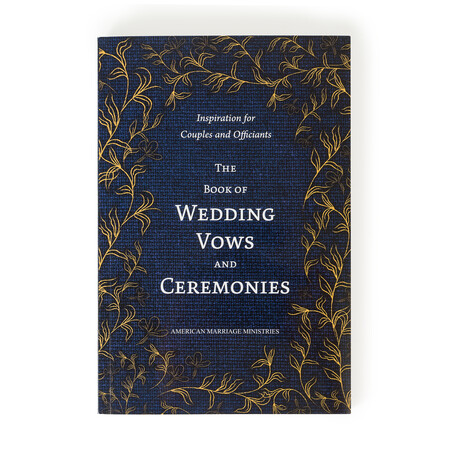
Timeless scripts and heartfelt vow inspiration to bring life to your ceremony.
Learn from the Pros to Officiate with Confidence!
POPULAR ARTICLES

Everything you need to know to officiate.

Need inspiration? Check out our free ceremony scripts!
Become a Wedding Officiant with Our Free Online Ordination!


