AMERICAN WEDDINGS BLOG
Stay up to date with the latest wedding ceremony trends, script writing inspiration, tips and advice for first-time officiants, and news that matters to couples and wedding ministers.
Stay up to date with the latest wedding ceremony trends, script writing inspiration, tips and advice for first-time officiants, and news that matters to couples and wedding ministers.
Published Monday, May. 5th, 2025 | Last updated Thursday, Jul. 17th, 2025

A relationship expert recently suggested that short-term marriage contracts will one day offer a popular alternative to lifelong matrimony. These short-term contracts could be renewed every few years if the couple chooses, or not.
It’s an intriguing idea, to be sure! Let’s take a look…
Marilyn Sutherland, a relationship and communication coach, proposed the idea of short-term wedding contracts in a YourTango article published last week, predicting the next big marriage trends. She said:
“The legal aspects of marriage may change from 'til death do us part to short-term agreements that can be renewed in three to five years. This may result in more committed people because they don't want to break up every time the agreement expires.
I believe these short-term agreements won't prevent heartbreak and may even contribute to heartbreak if people are not committed to making it work."
(Marilyn Sutherland, relationship & communication coach, via YourTango)
This idea probably isn’t really that far-fetched at second glance, or that far in the future. You don’t need to look much further than the high failure rate of first marriages in the U.S. to see why some couples might want to hedge their bets against ‘til death do us part.’
And it’s certainly interesting to think about what a short-term marriage might look like in the United States – both socially and legally. Would it require a distinct type of marriage license, like those for confidential marriages and covenant marriages? With each state creating its own marriage laws, how would it be enforced from one jurisdiction to the next? Would it function more like a prenuptial agreement, or a business partnership – a sort of LLC for love?
Of course, many couples in the U.S. already enjoy domestic partnerships that function a lot like short-term marriages – cohabitating, sharing health insurance and income, and coparenting for long periods of time before heading their separate ways, without being officially married. In this case, it’s easy to imagine a short-term marriage contract becoming a standard safeguard when co-signing a lease, traveling abroad, or becoming ‘exclusive’ with a partner.
Related: Why Gen Z is Choosing Domestic Partnership Over Marriage
In modern wedding vows, some couples are already swapping out ‘until death do us part’ for more prudent phrasing: ‘For as long as our love shall last.’ This wording does seem fairly realistic, though not quite as committed, as it were.
Consider the (socially-charged) Nikah mut'ah allowed in some Muslim communities – a type of temporary marriage that can last anywhere from an hour to several years. In these controversial unions, men pay women for a fixed-term of marriage. Yup, it’s kinda what it sounds like, but it shows that even in conservative societies, rules still conform to human nature, even while trying to control it. It's important to note that the rules for mut'ah marriages are very different from standard Islamic marriages – and likely in a category of their own – since most people see them as a way to get around Islamic religious law, and women can’t claim alimony or support. In modern practice, mut’ah is mostly used for physical intimacy rather than a traditional marriage partnership.
Another common example of temporary marriage is the ‘Year and a Day’ Celtic handfasting ritual, a one-year marriage arrangement once popular among Celtic Pagans. Couples pledge their love in a traditional Celtic handfasting ceremony, and then recommit a year and a day later – only if they choose to remain married.
Is Marilyn Sutherland right in her prediction that short-term marriage contracts will become the norm in the next 25 years? The divorce rate has declined in recent years, but so has the overall marriage rate (when compared to the 1970s, according to Axios).
Given the complications and freedoms of modern life, some people might see short-term marriage contracts as a safer bet than dating, while others might see them as a long term risk against commitment.
We look forward to seeing how this predicted trend unfolds!


Choose Your Officiant with our "Will You Marry Us?" Gift Package.

Our premiere package contains everyting you need to officiate like a pro.
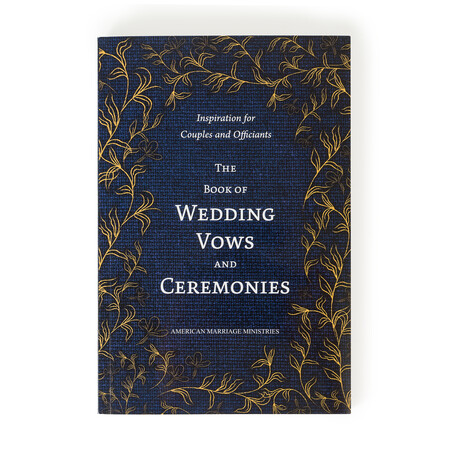
Timeless scripts and heartfelt vow inspiration to bring life to your ceremony.
Learn from the Pros to Officiate with Confidence!
POPULAR ARTICLES

Everything you need to know to officiate.

Need inspiration? Check out our free ceremony scripts!
Become a Wedding Officiant with Our Free Online Ordination!


.jpg)
