AMERICAN WEDDINGS BLOG
Stay up to date with the latest wedding ceremony trends, script writing inspiration, tips and advice for first-time officiants, and news that matters to couples and wedding ministers.
Stay up to date with the latest wedding ceremony trends, script writing inspiration, tips and advice for first-time officiants, and news that matters to couples and wedding ministers.
Published Friday, Oct. 23rd, 2026

Two private equity companies now own the three largest marketplaces in the wedding industry – Zola, The Knot, and WeddingWire – along with 73% of the market’s AI visibility.
To compete, independent wedding vendors must reconsider their digital presence and online marketing strategies, and prioritize human-to-human connections:
Engaged couples can help small businesses by relying less on AI-powered wedding planning apps and AI search tools. Ask for recommendations from friends and local venues.
What do the wedding industry, AI-powered surveillance, rent fixing, and food deserts in low income neighborhoods have in common? Private equity, of course! The same deep-pocket players behind data centers and bossware are also responsible for the recent strategic acquisition of Zola, Inc. by The Knot Worldwide.
As investors continue to merge and consolidate the largest wedding platforms in the industry, you have to wonder – what’s in it for them, and how can small businesses stay afloat in their wake?
Now, you might think this is sensational at best, and total baloney at worst. But is it?
Just take a look, then we’ll talk about why having these companies dictating the future of the wedding industry matters so much.
Related: The Ultimate Wedding Officiant Business Guide: All Our Pro Officiant Resources in One Place
Permira Funds, one of the investment firms that owns The Knot, invested hundreds-of-millions of dollars to become the majority shareholder of the ‘behavioral biometrics’ tech leader, BioCatch, which was sold two months ago to Visa for $2.4 billion.
They’ve also been a majority owner of Lytx since 2020, a company that uses AI-powered video surveillance in commercial vehicles to monitor drivers, and are a primary investor in tech giant Nexthink, which uses AI to monitor employee’s digital activity (neatly called ‘Digital Employee Experience (DEX) management software), valued at $3 billion.
Permira also invests heavily in data center infrastructure – building those “mega-scale” data centers that everyone hates. Tract Capital and Fleet Data Centers, which plan and build massive data centers around the country, are now multi-billion dollar companies thanks to Permira's funding.
Spectrum Equity, for their part, are a major investor in Otter.ai, which collects user data to train its AI models – and has faced class-action lawsuits because of how it uses and shares data, including violating state ‘biometric privacy laws.’
Spectrum was also the majority shareholder in SurveyMoney, and an early financial backer for Headspace, a mental health app which shares user data with third parties to generate targeted advertising. They invested nearly $40 million in Headspace in 2017, when the company began gaining popularity.
And both private equity firms, Permira Funds and Spectrum Equity, were once major investors in genealogy platform Ancestry.com. Permira took the data-tech giant private back in 2012 in a $1.6 billion deal, but Spectrum had already been investing in the company since 2003, as their longest-running backer. Ancestry.com has faced multiple privacy class action lawsuits over the years, and continues to collect genomic consumer data from millions of people around the world.
Related: The Knot Just Acquired Simply Eloped… What Are They Up To?

So, what do massive investment firms like Permira Funds and Spectrum Equity want from a sweet little wedding planning platform like Zola, Inc? Do they just love love that much?
The immediate concern is lack of competition. When one company controls a market, they can raise prices which means vendors make less and couples pay more. It's a tale as old as time (or at least capitalism). A lot of pros we talk to are already bailing out, saying it isn't worth the money.
Based on their portfolios, a good guess would also be data capital. They could use this to collect information from the millions of couples getting married each year, and use that data to control the $1 trillion global wedding services market – using your love stories to charge wedding vendors higher prices.
There are nearly 2.0 to 2.1 million weddings in the United States each year, and nearly 2.5 million engagements. It’s estimated that 36% of these engaged couples used AI in wedding planning their wedding last year, which translates to about 1.8 million individuals answering personal questions on AI-powered apps, offering intimate details about their relationships and spending habits to private-equity-backed wedding platforms in a single year.
That’s a lot of valuable information which could be turned into advertising revenue and future tech developments.

But data consolidation isn’t the only possible goal. At least, that’s not the most immediate impact of Zola’s acquisition. Zola also happened to be The Knot’s leading competitor in ‘AI visibility’ – which is a measure of how often a company shows up in AI generated search results.
Before the acquisition, Zola showed up in 9.5% of AI answers when users searched for something related to wedding planning. The Knot had 13% visibility, and its sister-platform WeddingWire showed up in 7%. By purchasing Zola, Permira and Spectrum effectively neutralized their brands' main competition.
And the move may have been worth even more than you imagine; according to research released by 5W PR in July of this year, these three companies combined hold a massive 73% majority share of AI visibility online.
More concerningly, these researchers also found that nearly 84% of independent wedding vendors do not appear in AI citations at all.
Since large language models (LLMs) like ChatGPT and Gemini tend to pull answers from massive websites with high domain authority, they strongly favor industry heavy-hitters like The Knot, WeddingWire, and Zola when compiling an answer. (All of which are now owned by the same two firms. See what we mean?)
That’s 84% of the country’s wedding venues, wedding photographers, officiants and celebrants, caterers, wedding planners, and more – completely invisible when couples use AI search features online.
When couples search for “wedding officiants in Atlanta” using ChatGPT, or “Baltimore wedding photographers” in Google Chrome, the top AI search results probably won’t be local vendors. Instead, you’ll see links to paid vendor directories hosted on The Knot, WeddingWire, and Zola.
This leaves small business owners in an impossible spot: either remain functionally invisible online to potential customers, or pay a high monthly fee to be listed on one of these wedding platform’s vendor directories (with no guarantee of being seen anyway).
Historically, an estimated 77% of The Knot Worldwide's annual revenue comes from the subscription fees it charges vendors to appear in the marketplace and registry. For a company that earns an estimated $200 to $500 million a year, that's around $300 million earned from wedding vendors just hoping to be found by couples online.
Private equity has managed to turn both engaged couples and wedding vendors into commodities, each one paying a premium fee for access to the other.
So, what can small businesses do?

So what’s an independent wedding photographer or part time wedding officiant to do? How do you survive – nay, thrive – in an industry controlled by the seemingly-endless wealth of private equity firms?
If billion dollar conglomerates are playing digital gatekeeper to collect our data and feed it back to us as advertising, we’ve got to rely less on their products and rely more on each other.
And it’s going to take effort from both sides of the wedding aisle – from vendors and engaged couples. We have to stop buying the AI-generated hype, and start doing things differently.
Here's what we have to stop doing...
We have to stop relying on AI search options like Google’s AI Mode or Gemini, ChatGPT, and CoPilot.
We’ve got to stop paying inflated rates to be included in these massive, corporate vendor directories.
And here's what we have to start doing...
Write a few paragraphs each week about the friendly food truck vendor that offers a discount to newlyweds leaving their courthouse wedding, or the local consignment shop that always stocks incredible wedding fits, and post them. Show potential clients how much you love being a part of their community.
While it’s true that the best SEO and AEO still can’t beat a rigged system, regular posts with a hyperlocal focus can greatly increase your odds of being seen – either directly in online search results, or as a trusted source in AI search citations.
When couples find your name listed on an online directory, or hear about you from a friend, their very next move will be looking you up online. Make sure your digital presence doesn’t just confirm you exist.
Every word and image on your website and social media accounts should announce that you’re qualified, trustworthy, experienced, and confident that you can meet a client’s needs.
State your credentials, highlight your unique expertise and experience, and be transparent about pricing and services.
Make it easy for potential clients to contact you first using whatever method they prefer – by phone, email, or text – and include your typical response time in your contact form. These simple actions go a long way towards creating immediate trust and familiarity online.

Your business’s owned media channels, like a newsletter subscription list, are often more valuable than paid advertising. Everyone who clicks on an email is a potential client, and for that brief moment, you have their full attention. So it’s important to get them there, and keep them coming back.
Make it easy for people to subscribe to your email list: email-signup sheets at every wedding show, craft show, or farmer’s market; or an easy-to-use QR code that takes visitors directly to your site's sign-up page. Make sure your site has a highly visible SUBSCRIBE HERE form, and offer something free for new subscribers - a list of local venues, maybe, or an energizing wedding planning playlist.
Anywhere and everywhere that you regularly meet prospective clients, make sure you’re pitching your email list and the goodies that come with it.
Then, send your subscribers something interesting each month. Maybe a useful wedding planning tip, a meaningful quote, or a funny story from a real wedding you’ve worked. Keep your direct marketing materials to a minimum unless you’re offering a limited-time discount or launching a new service.
Use your email list to build strong brand loyalty and recognition through your personality and talent. Give your readers something they’ll want to share with a friend each month!
Even the least-experienced scammer can look legit online these days, especially with generative AI writing their promotional, creating their headshots, and designing their websites. That’s why it’s essential to build an offline referral network with other real wedding professionals in your area. These networks help engaged couples connect with vendors they can trust, and that have already been vetted by real people.
Visit wedding venues in your area to introduce yourself, and ask about their preferred vendors list.
Start a monthly meet-and-greet with other wedding professionals in your area, and get to know what their business is all about.
Ask your couples who they hired to take their photos, or to make their cake, and what the experience has been like.
Email other professionals you admire, and compliment the work they do.
Get to know the people in your wedding community, and build a network that’s so full of talent that it’s sure to meet the needs of any client you meet.

Still, taking the wedding industry back from private equity requires help from couples too.
Yes, it's true that planning a wedding can be exhausting. It’s tempting to just type in a few details about your love life, and let an app spit out a checklist for you. (Or a wedding script, or a supply shopping list).
But that convenience comes at a steep cost, one that might follow you into the next several decades of marriage. It's not just that vendors are pricing marketing spend into their invoices (trust us, they are). You’re handing over data that private equity firms could use to track your spending and target you with ads for years, while narrowing your vendor options.
And you’re allowing them to squeeze out the small businesses that give communities real diversity and charm – the same businesses that could help your family celebrate anniversaries, birthdays, homecomings, proms, and graduations down the road…if the businesses make it.
So to you couples, we say this – we’ll try to make wedding planning easier for you, and provide the best service we can – if you’ll only let us.
Ask friends for recommendations. Reach out to local venues for advice. Visit your local wedding shows and craft markets. Talk to shop owners and artisans in your area. Get to know the talented people in your community.
And when it’s time to celebrate, hire them! Put your money back into your community, instead of the pockets of private equity.



Choose Your Officiant with our "Will You Marry Us?" Gift Package.
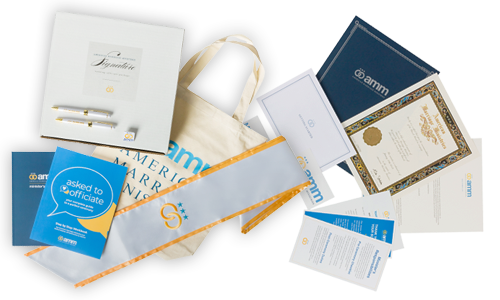
Our premiere package contains everyting you need to officiate like a pro.
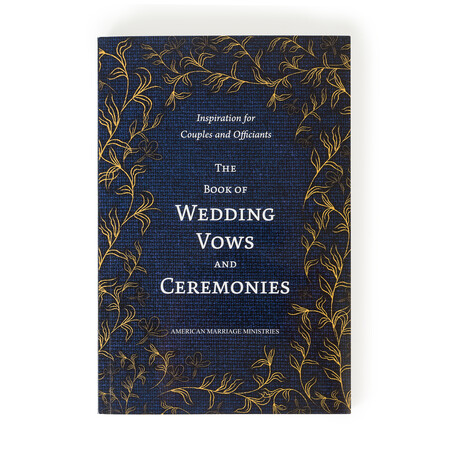
Timeless scripts and heartfelt vow inspiration to bring life to your ceremony.
Learn from the Pros to Officiate with Confidence!
POPULAR ARTICLES

Everything you need to know to officiate.

Need inspiration? Check out our free ceremony scripts!
Become a Wedding Officiant with Our Free Online Ordination!


