AMERICAN WEDDINGS BLOG
Stay up to date with the latest wedding ceremony trends, script writing inspiration, tips and advice for first-time officiants, and news that matters to couples and wedding ministers.
Stay up to date with the latest wedding ceremony trends, script writing inspiration, tips and advice for first-time officiants, and news that matters to couples and wedding ministers.
Published Thursday, Sep. 10th, 2026

Many engaged couples who practice African Diaspora faith traditions have a hard time finding an understanding, spiritually-aligned wedding officiant to marry them. However, free online ordination from a nondenominational church like American Marriage Ministries provides a legal pathway for practitioners of Vodou (Voodoo), Lucumi, Santeria, and similar folk religions to meet the requirements to perform weddings for their communities.
If you are an engaged couple, you can have a trusted elder, friend, or family member from your community get ordained online for free with American Marriage Ministries to legally perform your ceremony.
|* custom-button, "https://theamm.org/store/products/will-you-marry-us-gift-package", "HAVE A FRIEND OFFICIATE YOUR WEDDING" *|

When searching for a Santeria wedding officiant, planning a Vodou marriage ritual, or researching interfaith African diaspora wedding traditions – you probably won’t find very many wedding officiants listed online who are familiar with these faiths. There are a couple of reasons for this, and one valuable solution – having a friend officiate your wedding with online ordination from AMM.
Here’s a closer look, plus some advice on how to get started so you can choose a wonderful wedding officiant.
In general, many folk religions, ancestral faiths, and polytheistic or pantheistic faiths are stigmatized in the United States. Spiritual practices like Santeria, Palo Mayombe and Candomblé, with African roots, as well as practices like Wicca, Druidry, and Hellenism, with European roots, are not well understood by the mainstream.
In addition, decades of misrepresentation and racism towards African and Afro-Caribbean spiritual practices in movies, television shows, and news stories have led to fear and prejudice. Many people who practice modern variations of these old religions choose to keep their beliefs private, and engaged couples may have a private spiritual ceremony followed by a legal secular wedding to take care of the marriage paperwork, in order to avoid judgement from people outside their faith community. Unfortunately for these couples, having to plan two ceremonies, instead of one that combines the spiritual and legal aspects, requires extra time, effort, and money.
Of course, the primary reason it’s hard to find a legal officiant that’s familiar with these traditional faiths may be the nature of the spiritual communities themselves: Vodou, Santeria, and similar faiths often have decentralized structures. There’s often no central church or organization to report to, and they may not have a formal ordination process for leaders in the same way that Christianity does.
Without a formal ordination process, these leaders are sometimes not recognized by state governments – meaning Iyalocha, Babalocha, Babalawo, Olorisha may face difficulties performing legal weddings. Without additional credentials, they may be unable to sign marriage licenses for the communities they serve.
To navigate these rigid state laws, many spiritual leaders use online ordination as a practical legal tool to perform marriage ceremonies. Online ordination bridges the gap between state legal requirements and traditional faith practices, ensuring the spiritual ceremony honors the couple’s culture and beliefs, while checking all the legal boxes.
That’s where American Marriage Ministries comes in: If you want a member of your spiritual society or community to perform your wedding, consider online ordination through AMM.
|* ordination-button *|

American Marriage Ministries is a unique type of church, because we don’t ask our ministers to believe in a specific god or gods, or in any god at all. Instead, our core beliefs are about the sacred nature of marriage for all people, regardless of gender, sexual identity, race, culture of origin, ability, or faith.
We simply believe that all people have the right to get married, to enter into marriage in a way that aligns with their beliefs and values, and to perform marriage ceremonies for others.
We welcome people from all spiritual backgrounds who agree with this inclusive view of marriage, including many who belong to nonmainstream faiths like Vodou, Santeria, Palo, Hoodoo, Orisha, Candomblé, Umbanda, and so on.
If you want a close friend, relative, or spiritual leader to perform your wedding – or have been asked to officiate a wedding for friends – and believe all people have the right to get married in a ceremony that celebrates them, and have been asked to officiate a friend’s wedding, we’re here to help you!
American Marriage Ministries provides a reliable, legally-recognized formal ordination for wedding officiants – so that engaged couples from all faiths and cultures can choose an officiant that truly understands their beliefs, respects them, and will honor them in a marriage ceremony.
Ready to get started? AMM’s online ordination form is free and easy to fill out. Send this link to your chosen wedding officiant!
|* custom-button, "https://theamm.org/ordination-application", "FREE ONLINE ORDINATION APPLICATION" *|
After the ordination application has been processed, new ministers will receive a confirmation email with instructions and helpful advice – usually within just a couple minutes.
Once you receive your confirmation email, you are officially an ordained minister with American Marriage Ministries. Welcome!
AMM ordination gives you the authority to perform weddings and other religious ceremonies across the United States. You can perform these rituals in alignment with any spiritual beliefs you choose, as long as you follow your state's local laws.
After getting ordained, you might need to file copies of your minister credentials with the local government before you can officiate a legal wedding. Currently, only 15 states require this extra step before performing marriage. Click the link below to learn more, and to see if your state requires officiants to register:
If the wedding isn’t held in one of these states, your AMM ordination is generally all you need to legally sign a marriage license. If you do need additional credentials, click the link below to order a curated package for your wedding state. Our minister ordination packages come with all the documents you need, along with helpful registration forms and instructions.
|* mop-button *|
Once you’re ordained with AMM, your official title is “Minister,” and this is the title you’ll write on the marriage license after the wedding ceremony (if it asks for one). You don’t have to use this formal title within your faith community, however.
Many AMM ministers choose to use alternate titles and personalized honorifics in their daily practices, especially if they have dual ordination with AMM and another organization. Likewise, you may prefer to use Santeros or Santeras, Houngan or Mambo, or any other title given to you by your faith community, in your House, or in your daily practices.
However, because your authority to officiate a wedding is given by your ordination with AMM, you must write “Minister” on the marriage license if it asks for your title.
Once ordained with AMM, you are both an AMM Minister and a spiritual leader in your community (dual ordination).


Choose Your Officiant with our "Will You Marry Us?" Gift Package.
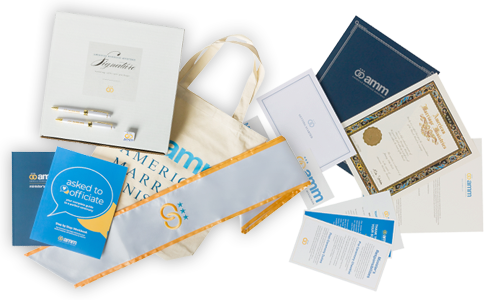
Our premiere package contains everyting you need to officiate like a pro.
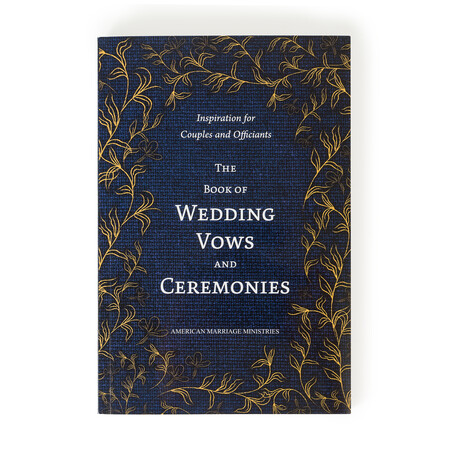
Timeless scripts and heartfelt vow inspiration to bring life to your ceremony.
Learn from the Pros to Officiate with Confidence!
POPULAR ARTICLES

Everything you need to know to officiate.

Need inspiration? Check out our free ceremony scripts!
Become a Wedding Officiant with Our Free Online Ordination!


