AMERICAN WEDDINGS BLOG
Stay up to date with the latest wedding ceremony trends, script writing inspiration, tips and advice for first-time officiants, and news that matters to couples and wedding ministers.
Stay up to date with the latest wedding ceremony trends, script writing inspiration, tips and advice for first-time officiants, and news that matters to couples and wedding ministers.
Published Wednesday, May. 13th, 2026

A couple weeks ago, Representative Keith Self (a Republican serving Texas) introduced a unique bill that would strip federal recognition from marriages between first cousins, making those couples ineligible for all federal marriage-related benefits and legal protections.
The bill wouldn’t outlaw these marriages – that’s up to states to decide – but it would keep couples from accessing basic benefits like joint tax filing and Social Security spousal benefits, disqualify them from sponsoring a spouse’s green card or K-3 marriage visa, and much more.
This appears to be the first time any federal legislation has been introduced to restrict first-cousin marriages – which is noteworthy because marriage laws are traditionally handled by individual states (except in rare cases when state laws violate Constitutional freedoms, as was the case with same-sex marriage rights).
Also noteworthy is the way this legislation, titled the Consanguineous Marriage Prohibition Act of 2026 (H.R. 8634), seems to parallel the approach used by the Defense of Marriage Act (DOMA) to strip legally-married same-sex couples of their federal benefits and protections. We’re not legal scholars of course, but the similarities are interesting, considering that DOMA was ruled unconstitutional for creating “second-class marriages” and promptly overturned in 2013 (followed a few years later by the legalization of same-sex marriage nationwide).
Given the unusual scope of the legislation, its similarity to past overreaches, and the fact that only 0.2% of marriages in the US are between cousins – it kinda makes us wonder: Why now?
What is consanguineous marriage?
“Consanguineous marriage” is a marriage between close blood relatives, including second cousins or closer. For reference, second cousins share a great-grandparent, while first cousins share a grandparent. While uncommon and often stigmatized in the United States since the mid-1900s, marriage between cousins is common worldwide, with more than 10% of all marriages being between first or second cousins. In many cultures and religions these marriages are considered unremarkable or ordinary, or even preferred as a way to keep families intact and preserve wealth.
Learn more: Kissing Cousins - The Popularity & Controversy of Cousin Marriage
Let's take a closer look at the possible motivations behind US H.R. 8634 and it's timing, as described in Rep Self's recent press release.
According to the press release from Congressman Self’s office, one motivation behind the bill is to curtail his perceived 'infiltration' of Islamic Sharia law in the United States:
“Cousin marriage—which is permitted under Sharia—is fundamentally incompatible with American culture and values,” Self says. “It should not be allowed anywhere in our country. The vast majority of states have already banned this third-world practice. It’s time for Congress to finish the job and enact a nationwide prohibition.” (this quote from the April 30th press release is an excerpt from an interview by The Daily Signal)
Note: While Congressman Self is calling for a “nationwide prohibition,” this bill would not prohibit cousin marriages in states where they are legal. It would strip these couples of federal recognition, but not outlaw their marriages.
This isn’t the only time Congressman Self has spoken about his distaste for Islamic religious law – it's a frequent focus for the lawmaker. In 2025, he launched the Sharia-Free America Caucus with fellow-Texan Chip Roy. Last fall he said that “Islam is stuck in the 8th century, and if they succeed at imposing their beliefs on us, we will be dragged back into the ‘Dark Ages.’” He’s cosponsor of the Protecting Puppies from Sharia Act introduced earlier this year, to “defend” the “right of all Americans to own a dog,” in response to some Muslims choosing not to own dogs for religious and cultural reasons. And Self’s Freedom Against Imposed Theology Harms (FAITH) Act, introduced this April, claims that “Sharia-adherent groups are attempting to impose parallel systems of control” in the United States.
Given that consanguineous marriage is most common in majority-Islamic countries and cultures, and that many consanguineous marriages in the US are between immigrants from these places, this could be a strong motivation behind the bill.
The congressman’s press release also states that “within certain ethnic and cultural groups, the rates [of consanguineous marriage] are as much as 40%. The expectation of assimilation into Western values” by immigrants “includes accepting America’s cultural marriage standards.” Here, the bill seems to address “third world” immigrants who don't assimilate closely-enough with specific American marriage trends.
Interestingly, cousin marriages were common among all families in the United States until the mid-1900s, despite being rare today. While more than 10% of all marriages globally are between first or second cousins (approximately 230 million married cousin couples worldwide!), only 0.2% of marriages in the US are consanguineous (approximately 125,000 married cousin-couples in the US).
Last, the press release cites a statistic that “children of these marriages have twice the incidence of birth defects, and the risk of stillbirths and infant deaths is increased by 50%. Throughout their lives, these children experience learning disabilities, health issues and reduced life expectancy.” (Note: Rep. Self states this is a CDC statistic, but we couldn't find it publicly available there. The CDC doesn't track this localized data, but the numbers align with a Born in Bradford UK report.)
The health of children is an important concern – although it is important to put this claim into context: Major studies confirm that nearly 93% to 94% of children born to first-cousins are completely healthy and free of major defects; the risk of defects increases from about 2-3% in non-related parents to about 4-6% in related parents (per Bennet et al. and the National Society of Genetic Counselors). This is certainly substantial, but not as guaranteed as the original framing might make it sound to a casual reader. For reference, the risk of birth defects also increases with a parent’s age – up to 4% when a mother is 35 or older, compared to 2% for women under 35.
Still, what’s interesting about Congressman Self’s bill is that it doesn’t just target couples who are first-cousins by blood. It also targets couples who are first-cousins by “affinity,” as in “by marriage.” This nuance kinda waters down the “risk to children” argument – there are no additional genetic risks to children born to parents who are cousins by marriage. This could be interpreted to mean that religious and cultural objections, not public health, are more immediate goals of the legislation.
This bill is unique because marriage laws are generally decided by individual states, though federal law operates separately when deciding who's eligible for federal benefits. This type of law isn't automatically unconstitutional (a couple can be legally married in their home state, but still treated differently under federal programs like taxes or immigration), but it could be challenged in court if a state or individual believes it violates their rights.
Currently, marriages between first cousins (related by blood, adoption, or marriage) are allowed to some extent in 27 states. 17 states and D.C. allow consanguineous first-cousin marriages without restriction; while 9 states require cousins to meet strict conditions to marry – such as both parties being above a certain age or sterile, agreeing to participate in genetic counseling, or being only related by adoption.
It’s also unique because of the extensive harm it could have on families, despite these marriages being legal in the states where they’re celebrated. These couples would lose more than 1,000 federal benefits and protections, including no Social Security spousal benefits and survivor benefits, no tax breaks for filing jointly, heavy estate taxes, loss of tax-free health coverage, no FMLA, and more – and citizens and lawful permanent residents would not be able to sponsor a foreign-born spouse for residency.
We’re not legal experts, but we do spend a lot of time reading about marriage laws. We like to stay informed so that we can keep our ministers informed. We’re not for or against cousin marriages – any moral questions and social stigma are way outside our scope as an organization. But we are for equal marriage rights, so when we saw the potential similarities this bill has to the 1996 Defense of Marriage act, it caught our interest:
The Consanguineous Marriage Prohibition Act of 2026 takes a similar approach to sidestepping state marriage laws as DOMA did, even amending the same section of federal law that DOMA did (1 U.S.C. § 7).
Here’s the backstory: In the late 1990s, the majority of lawmakers in Congress were not in favor of same-sex marriage. Still, a few states had started to legalize it. Because lawmakers couldn’t outlaw these marriages, they introduced the Defense of Marriage Act instead: DOMA inserted language into § 7 of the US code, saying that marriages would only be recognized federally if they were between a man and woman, regardless of whether the marriage was legal in the state where it was formed.
When SCOTUS finally ruled that Section 3 of DOMA was unconstitutional in 2013 (in United States v. Windsor), the reversal forced the federal government to recognize those legally-entered same-sex marriages, restoring federal benefits and protections to same-sex families. That was a huge step forward for marriage rights, and led the way to national marriage equality following Obergefell v Hodges in 2015.
When deciding United States v. Windsor, Justice Kennedy wrote: “The federal statute is invalid, for no legitimate purpose overcomes the purpose and effect to disparage and to injure those whom the State, by its marriage laws, sought to protect in personhood and dignity. By seeking to displace this protection and treating those persons as living in marriages less respected than others, the federal statute is in violation of the Fifth Amendment.”
Now, if this new bill passed, the same section of federal law would be amended again, this time to say that only marriages between “2 individuals who are not related by affinity or consanguinity within the degree of first cousin’’ are recognized federally, regardless of whether they are legal at the state level or not. By including cousins by “affinity” – not just by blood – the bill shifts the focus away from public health claims, toward regulation seemingly based on specific cultural or religious views.
Read the full text of H.R. 8634 here: Consanguineous Marriage Prohibition Act of 2026
Again, we’re not legal scholars, but it certainly seems possible that this amendment could run into the same constitutional issues that DOMA did by creating “second-class marriages.”
We’re curious to see how this legislation moves forward, and what implications it may have on how federal lawmakers choose to navigate – or challenge – state marriage laws in the future.
Disclaimer: The views and interpretations expressed in this article are intended for general information and educational purposes for our network of ministers. We take no moral or theological stance on cousin marriage itself. We are a church, not lawyers! Nothing written here is legal advice. If you need legal advice on marriage, immigration, or tax laws, please contact an attorney directly with your questions.


Choose Your Officiant with our "Will You Marry Us?" Gift Package.

Our premiere package contains everyting you need to officiate like a pro.
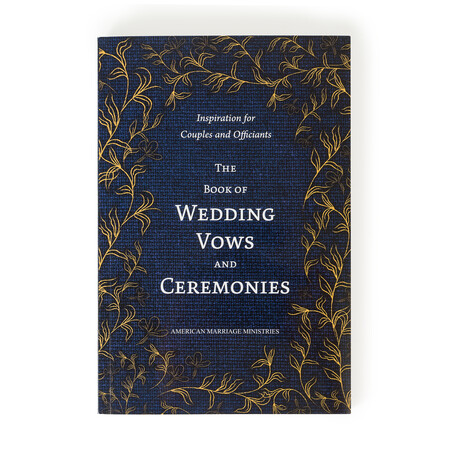
Timeless scripts and heartfelt vow inspiration to bring life to your ceremony.
Learn from the Pros to Officiate with Confidence!
POPULAR ARTICLES

Everything you need to know to officiate.

Need inspiration? Check out our free ceremony scripts!
Become a Wedding Officiant with Our Free Online Ordination!


