AMERICAN WEDDINGS BLOG
Stay up to date with the latest wedding ceremony trends, script writing inspiration, tips and advice for first-time officiants, and news that matters to couples and wedding ministers.
Stay up to date with the latest wedding ceremony trends, script writing inspiration, tips and advice for first-time officiants, and news that matters to couples and wedding ministers.
Published Tuesday, Sep. 9th, 2025 | Last updated Wednesday, Nov. 19th, 2025
Este articulo en español
Whether you’re just starting out as a wedding officiant, or considering a refresh of your marketing efforts, it’s time to take a closer look at your website. These 6 common issues are simple to fix, and can quickly lead to more bookings, referrals, and client leads.
Let's take a closer look at each issue in the article below, and how to fix it!
Related: How to Start a Website for Your Wedding Officiant Business
Many wedding websites leave out a key detail: location info. For clients planning a wedding in a specific location, that’s a huge deal! Here's how to fix it.
First, include your city, state, and what you do (wedding officiant, wedding photographer, etc) “above the fold” on your Home page. This term originated with traditional newspaper publishing, and refers to the top section of each webpage, often the first thing your clients see when they find you online.
Then, add it to the footer of your website, your About Me and Contact pages, your social media bios, contact cards and business cards, and within your blog if you have one – especially when you write about real weddings you’ve worked in your area. You don’t need to keyword spam or keyword stuff – just make sure it’s included once in these key places. For the best results, include these details in a heading, not buried within a paragraph.
Take it further with solid location-targeted SEO: Be strategic with how you include your location on your website and socials. Use longtail keywords so that you’re more likely to show up in your prospective clients’ search. This means writing “I’m an experienced Seattle wedding officiant” in your About Me section, instead of “I serve clients in Seattle.” Or “Misha Brown: Wedding Officiant, Portland Oregon” in your social bio or About Me section, instead of “Misha performs ceremonies all over Portland.”
Consider the wedding officiant websites shown below. In each unique example, these AMM Ministers have included their service location "above the fold," prominently on their home pages.
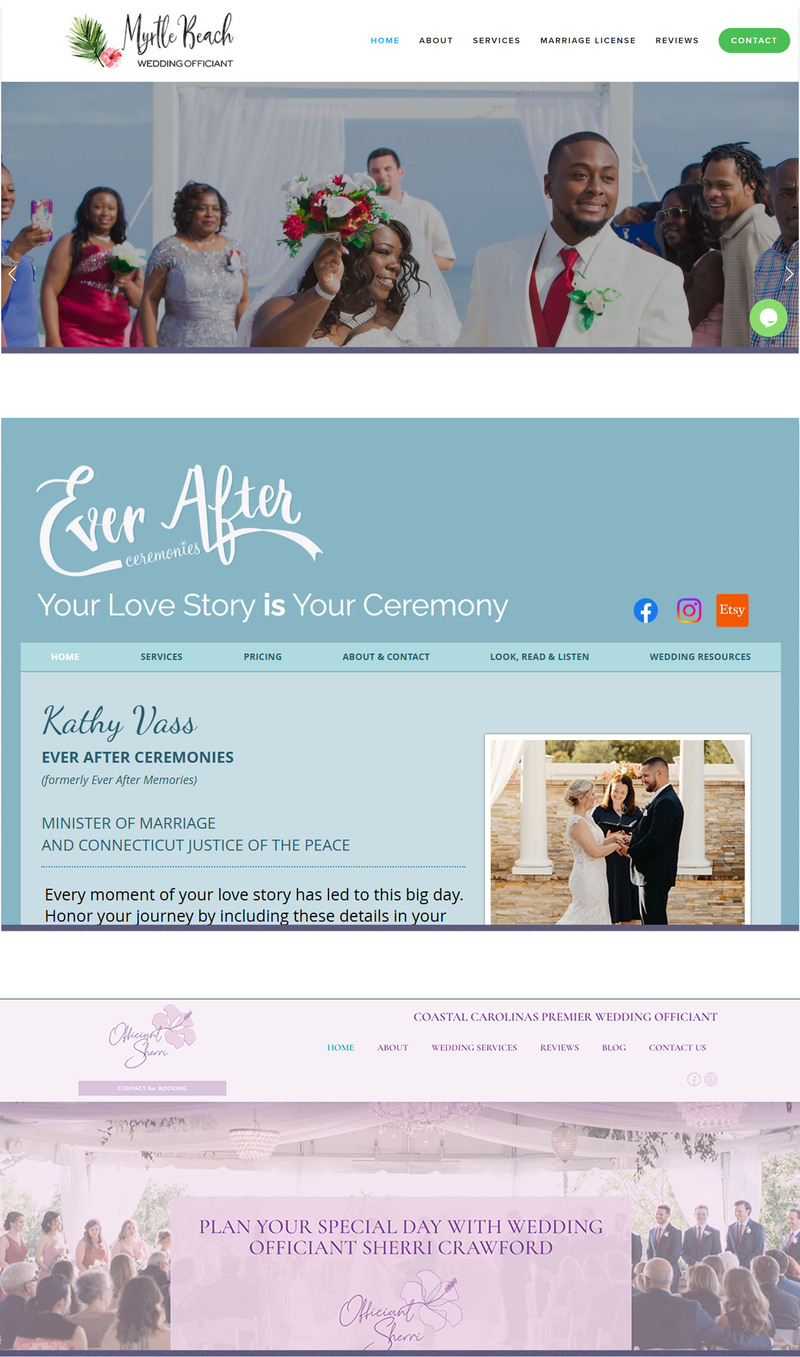
Shown above, website screenshots for AMM Ministers Eric Hunt (of Myrtle Beach Wedding Officiant); Kathy Voss (of Ever After Ceremonies); and Sherri Crawford (of Officiant Sherri).
This is so important! If you’re a wedding officiant or wedding vendor of any kind, you know that weddings aren’t just business. They’re personal. And as the face of your company, couples want to see and connect with you on a personal level. This means you need to include photos of yourself on your website and social media. This human touch is essential in helping potential clients connect with you and what you have to offer:
“[Including photos of yourself] is really going to help people like and know you, and trust you, and have a face to put to the business before they’re actually working with you,” web designer Heather Dodge says. “This gives you a much higher probability of someone booking you from finding you online… So if you have not had updated branding photos in the last six months to a year, this is your reminder to make sure you schedule those.”
A professional headshot, a photo of you working at a wedding, even a close up photo of your hands holding a written wedding ceremony script – these all add a personal, human touch to your web presence and help build trust with potential clients.
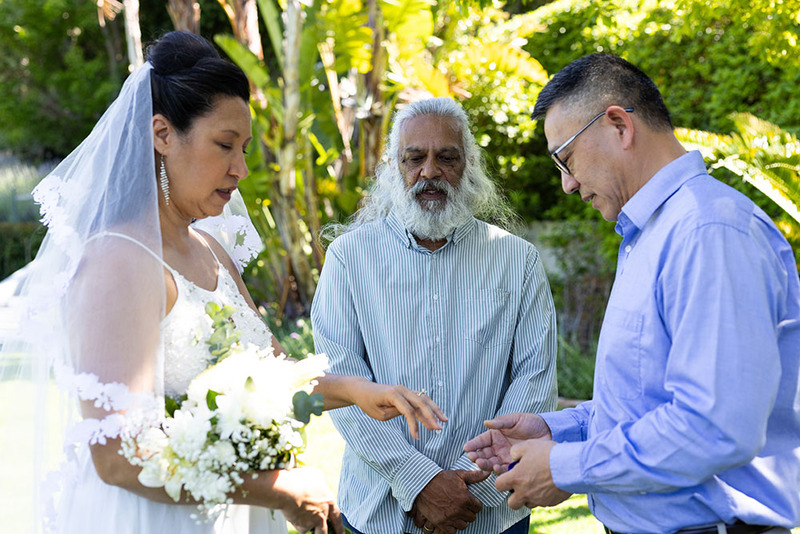
Weddings aren't just business, they're personal. Show prospective clients who you are and what you're all about! (Photo: wavebreak3 / Adobe Stock)
A contact form is not going to cut it! You should always include your email address on your Contact page to make it easy for people to contact you. It’s ok if you disguise it to reduce spammers and bots, for example writing out “emailme <at> gmail <dot> com”.
This is crucial considering how important networking is in the wedding industry. Other vendors who want to work with you aren’t going to fill out a lengthy contact form. Press contacts who want to email you with interview inquiries don't want to fill in the blanks on an intake form for a non-existent wedding. And potential clients who have never met you might not feel comfortable giving you all of their personal details yet!
These are just a few reasons why it’s always a good idea to include your email address in your footer or on your Contact page, even if you provide a contact form as well.
|* mop-button *|
This is another SEO strategy we don’t see used enough on officiants’ websites: use question keywords in strategic places on your website. Question keywords are also called conversational keywords, and involve commonly searched phrases written in the form of a question. These types of keywords are easily placed on your Services page or within blog posts.
For example, if you specialize in handfastings and Wiccan wedding ceremonies, a blog post or service description that uses the conversational keywords “What happens at a traditional handfasting ceremony?” or “Can a wiccan handfasting ceremony be poly?” as a heading or title is likely to attract the right kinds of clients to your website, leading to more solid leads and bookings.
Consider the questions your potential clients are asking, and use a free SEO tool to pick the right wording for your headings and posts. When you answer these questions, you’re driving traffic to your website and demonstrating your expertise to the types of clients you want to book!
Related: How to write a compelling minister profile or personal bio
This suggestion is for strong supporters of marriage equality: Engaged couples want to know that you share and respect their values before they hire you, and often before they even contact you. This is particularly true for couples who are LGBTQ+, interracial, or interfaith; but couples who aren't part of these communities may also be encouraged to book with you if they know you're an ally.
It's a wonderful start to say that you marry “all couples," but that might not be enough to help marginalized couples feel safe enough to contact you. If you feel comfortable doing so, it can be beneficial to get specific, as in “Proudly serving all couples, including all LGBTQ+, interracial, and interfaith couples."
This can be an important distinction in the current social climate. Consider that people's beliefs and values are nuanced, for example some officiants are pro-gay marriage, but anti-trans; or support interracial marriages, but not same-sex marriages.
If you’re widely inclusive, saying so outright can help you attract more clients. Using specific, inclusive keywords like “LGBTQ wedding officiant” and “trans friendly wedding photographer” is also a sound SEO strategy, and helps place you in front of the types of couples you want to meet.
In addition to saying it, show it! Include a few photos of interracial couples and LGBTQ+ couples in your blog posts, on your Services page, Home page, or wedding photo gallery. If you’re just getting started, a few well-chosen stock photos can make your website feel like an inviting, safe space for couples online.
Consider this newlywed’s experience in Missouri, which might have been avoided by inclusive language on vendor websites:
“I'm in Missouri and while most vendors are fine, some are very conservative. I always disclose that this is a queer wedding and my fiance is transgender. Some vendors have declined to give us quotes because of their beliefs. Others have told us they have personal beliefs that we're sinful but will take our money anyway (no thanks, I don't need those vibes).”
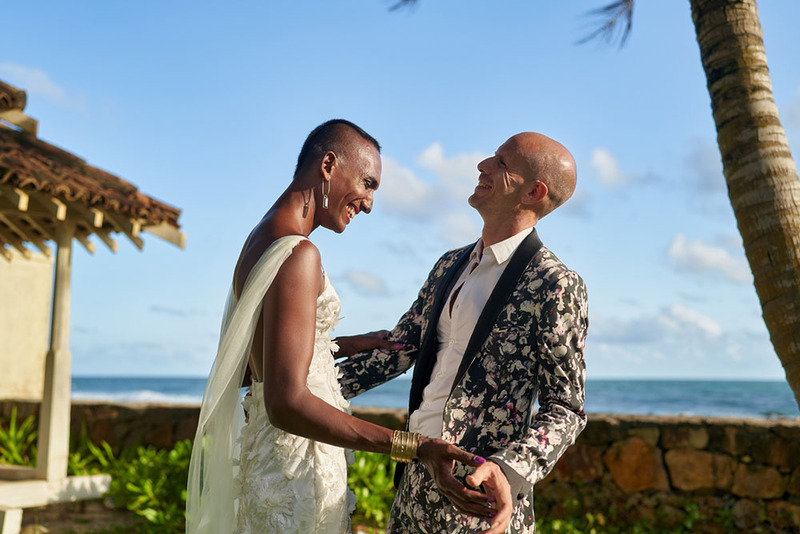
(Photo: artiemedvedev/ iStock)
This one is bound to be contentious. After all, there is a hot debate within the industry about whether or not to include pricing information on your website. But here’s the thing – if a prospective client has never hired a wedding officiant before, they don’t even have a ballpark idea of your rates, or what they might include. They may click away to another vendor who is upfront about costs.
This also means you’re going to be fielding lots of emails asking how much you charge, with a significant drop off rate. If you’re ok with this, and like leading with a little mystery, no worries. But if you value transparency (and your time), you might want to include basic pricing info on your website.
Related: Pro Wedding Officiants Give Advice on What to Charge & When to Raise Your Rates
If you offer standard packages without customization, give a set price. But if you offer a wide range of services, or a lot of customization, then a general overview of your price points will usually do.
For example, if you offer a wide range of ceremony services, you might write that your rates vary from $200 for a simple license signing to $2,000 and up for a formal ceremony with a custom wedding script, with several options in between. If you only offer formal ceremonies with all the frills, you might write that ceremony services start at $2,000 and increase with additional elements and personalization.
Consider what marketing creative and sales behaviorist Liston Witherill says; in this example, he’s talking about websites – but he might as well be talking about weddings! When it comes to a service business, it’s the same principle:
“If you’re selling custom websites that vary with the specific needs of the client, then you can’t publish a set price. Instead, you could publish a minimum price to disqualify anyone who doesn’t have the budget for you.”
He adds, “If you don’t publish prices, you’re probably in the “let’s figure out their budget” camp. And if you are, you’ll religiously seek the client’s budget during your sales process. It’s likely that they’ll be reluctant to say their budget, or even know what it is.”
Again, this one is up for debate. But if you find you’re answering a lot of initial inquiries without a lot of follow up, it might be something to add to your site to see what changes.
Fine-tuning your website to address these six issues can make a big difference in web traffic, bookings, and client trust. Even better? They’re easy to do.
Give it a try – make one of these simple fixes to your website and see how clients respond. Get creative, have fun, and enjoy the wedding season!

(Photo: Deagreez / iStock)
Whether you want to officiate one wedding, or one hundred weddings, American Marriage Ministries has the resources you need to succeed! The first step is to get ordained online with AMM using our free and fast minister ordination application. You don't have to belong to any specific faith or religion to get ordained with AMM.
|* ordination-button *|
AMM Ministers can choose from a variety of wedding officiant training options, from free online training to paid virtual courses and in-person seminars. Click the links below to learn more.
Get ordained online free with American Marriage Ministries to marry friends and family!


Choose Your Officiant with our "Will You Marry Us?" Gift Package.
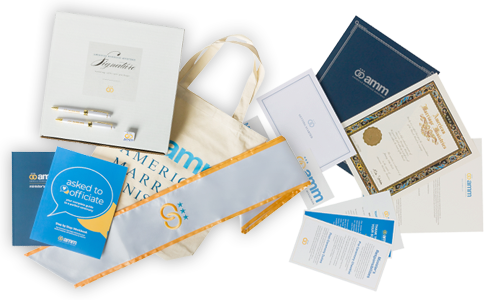
Our premiere package contains everyting you need to officiate like a pro.
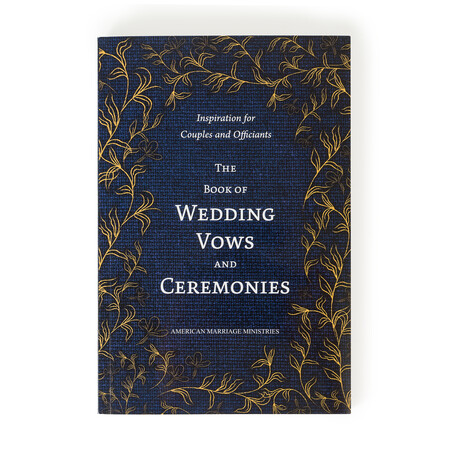
Timeless scripts and heartfelt vow inspiration to bring life to your ceremony.
Learn from the Pros to Officiate with Confidence!
POPULAR ARTICLES

Everything you need to know to officiate.

Need inspiration? Check out our free ceremony scripts!
Become a Wedding Officiant with Our Free Online Ordination!


