Ohio Remote Marriage Ceremony Requirements

If you are planning to officiate a wedding in Ohio, check out our page Get Ordained in Ohio.
If you are planning to officiate a wedding in Ohio, check out our page Get Ordained in Ohio.
Online weddings conducted over video-conference are not allowed in Ohio. Both parties to the marriage must be physically present at the ceremony, along with an authorized wedding officiant. A friend or relative can officiate your wedding in Kentucky by becoming an online-ordained minister with American Marriage Ministries (AMM).
If you're interested in getting married online, consider applying for your marriage license remotely through Utah's remote marriage portal instead: How to Get Married in an Online Wedding Ceremony in Utah. You can attend this remote ceremony from anywhere in the world, including from your living room in Kentucky!
Currently, marriage license applications cannot be completed completely online in Ohio. However, depending on where you apply, you may be allowed or required to “pre-register” online, by starting your marriage application on the county probate court website. This option is not offered everywhere, however, so check with your local probate court for details. If you pre-register online, you will still need to visit the probate court office in person to complete the process and receive your marriage license.
All couples must apply for an Ohio marriage license before the wedding, and licenses are issued by the county’s Probate Court. If you or your partner are Ohio residents, you must apply for your marriage license in the county where one of you live. If you’re marrying in Ohio from out-of-state, you must apply in the county where the wedding will take place.
Click the links below for help filling out the marriage license as an officiant:
All ministers must register with the Ohio Secretary of State before performing a marriage ceremony in Ohio (Ohio Revised Code § 3101.08). This includes anyone ordained online with American Marriage Ministries who plans to officiate a friend's wedding in the state.
Minister registration is a simple process and can be done through the mail or online using the OH Minister License Records Portal. Provided there are no complications, the Secretary of State's office usually takes 2-3 days to process your application.
Follow our simple step-by-step instructions and links to the required information here:
Find Your County’s Probate Court: Directory of Ohio Probate Courts (Addresses & Phone Numbers)
Online weddings, livestream weddings, and small in-person guest lists have become a normal part of life, but it wasn't always this way! During the COVID-19 pandemic, the technology was new and evolved quickly, because the only way for many guests to attend a wedding to join remotely using a computer, tablet, or smartphone.
If you're considering an online wedding, a tiny elopement with just you and your officiant, or even a 'just us' elopement, remember that Ohio marriage laws regulate who must be in attendance at your ceremony, and how the ceremony is conducted. Here are some options to help adapt your wedding plans in Ohio to celebrate.

For the sake of clarity, we differentiate between a virtual wedding and a livestream wedding by who is in attendance and how they are conducted:
If the wedding officiant and couple are in separate physical locations, and the officiant performs the ceremony over video-conference technology (like Zoom, Google Meet, etc), then we call that a "virtual wedding." You might also hear it called a "Zoom wedding," "online wedding," or "remote marriage ceremony." Guests may or may not attend these ceremonies (either seated around the couple or joining remotely as well), depending on the couple's preferences.
If the couple and the wedding officiant are in the same physical location during the ceremony, but some or all of the guests are watching the wedding remotely (online), we call that a livestream wedding. You may also hear this referred to as a "hybrid wedding." In this case, the marriage ceremony itself is happening in one physical place, and it's being livestreamed out to guests.
You can read more about what distinguishes each option here.
(Keep in mind that metaverse weddings and getting married in a video game are a separate category of tech-wedding altogether, and are strictly symbolic. They must be combined with a traditional ceremony to meet legal requirements.)

You can livestream any activity or event, and it doesn't matter where you are in Ohio, what you're doing or how many people are physically present with you. Some of the most popular platforms include Zoom, Google Meet, Facebook Live, and Instagram Live.
If you want to host your own livestream, all you really need is a tripod and a phone with a good camera on it; your guests will be able to participate remotely and enjoy every part of your ceremony. Most platforms allow guests to comment, chat, react, and interact in a number of ways.
Many wedding professionals have also expanded their offerings in recent years to include wedding livestreaming services. For some couples, having a professional videographer or wedding content creator running things is well worth the extra money.
Both virtual weddings and livestream weddings are a creative way to have friends and family join the ceremony at no cost from anywhere in the world. For many couples, this technology has completely changed the way they celebrate love!
Ready for more online wedding inspiration? Check out:
A Virtual Wedding Ceremony Script with Special Readings
Learn from the Pros to Officiate with Confidence!

Choose Your Officiant with our "Will You Marry Us?" Gift Package.

Our premiere package contains everyting you need to officiate like a pro.
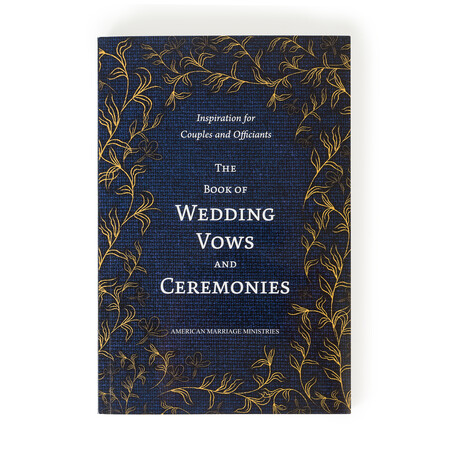
Timeless scripts and heartfelt vow inspiration to bring life to your ceremony.

Stay up-to-date with the latest wedding industry trends.

Need inspiration? Check out our free ceremony scripts!

Everything you need to know to officiate.

Test your understanding of Ohio Marriage Laws.
Become a Wedding Officiant with Our Free Online Ordination!